
【Did You Know?】Why Does Music Make Waiting Feel Shorter?
At the bus stop, every glance at the clock seems to reveal just two more minutes. Waiting for a reply can feel like an entire afternoon. Put on headphones, though, and a song later you might think, “Has that much time already passed?” Music does not speed up the clock. It may make the wait easier to spend.
Waiting can turn into watching the clock
The delivery has not arrived. The bus is still missing. There is no new message. Sometimes the hardest part is not a few minutes themselves, but not knowing how many more there will be.
“What time is it?” “Why are they not here?” “Has something happened?” Each check brings you back to the same thought: I am still waiting. Like watching a kettle, even the quiet before anything happens can feel long.

A song gives your attention somewhere else to go
With headphones on, you might follow a lyric, anticipate the chorus or notice a drum part. An otherwise empty interval now has something happening inside it: you are listening.
Attention offers one possible explanation: music may leave less attention for monitoring time. But feeling that time flew and estimating how many minutes elapsed are different judgments. One does not automatically establish the other.
Familiar songs may help, depending on the task
Bailey and Areni (2006) found shorter estimates with familiar versus unfamiliar music during idle waiting. Memory-task results differed, sometimes reversing under particular conditions.
This is not proof that music always beats silence, or that familiarity equals liking. Choosing a song you want to keep hearing is an accessible everyday experiment. Whether it makes this wait more comfortable is something to notice for yourself.
Faster music does not necessarily make time feel faster
Droit-Volet and colleagues (2013) found fast-tempo excerpts judged longer than slow ones in seconds-long duration tasks. This was not a bus-wait experiment or a direct test of ten-minute waits.
There is no universal fast-forward button. A song you keep wanting to skip might simply replace “Why is the bus not here?” with “Why is this song still playing?” That is an everyday possibility, not a measured finding of these studies.
Perhaps the difference is how you spend the wait
Ten minutes can feel like being stuck. Another day, it can feel like a little time you have for music. The wait remains, but there can be something of your own inside it.
You do not need to measure how much impatience a song has saved. A few minutes without refreshing a screen, or a melody you enjoy noticing, can already be a different way to spend the interval.
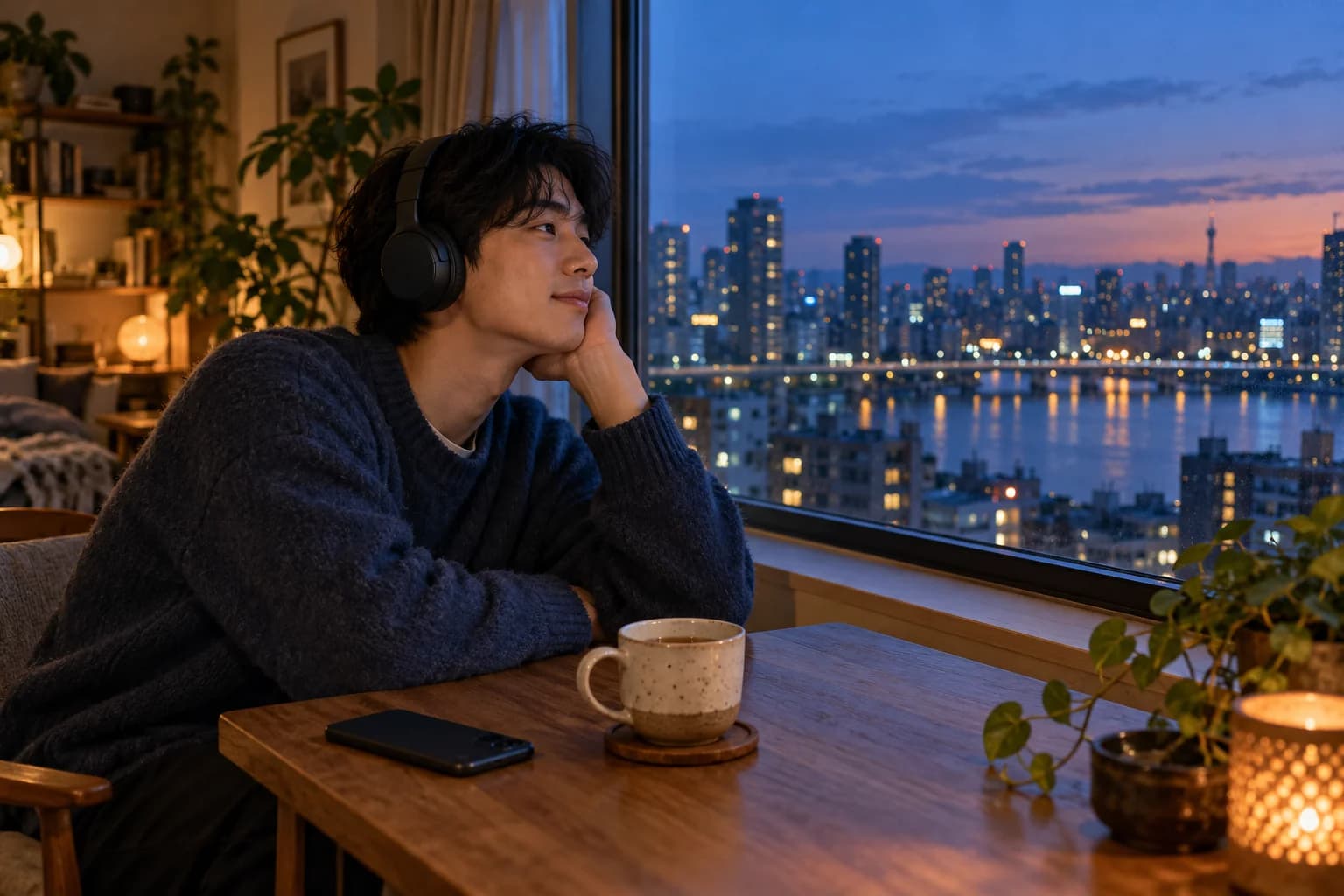
Next time, choose a song you actually want to hear
While waiting for a friend, a delivery or a bus, pick one song and put your phone down for a moment. Enjoy a familiar chorus, or choose quiet if that fits today. Listening need not become another assignment.
Keep the volume low enough to notice announcements, your number being called and your surroundings. Set a reminder if needed, and use a clock to check the time. A playlist cannot make a bus arrive early or make someone reply.
There is, of course, another possibility: the song ends and the reply still has not come. Before analyzing your sense of time, remember that the message may simply not have arrived. What song do you usually play while waiting?
Research and further reading
The papers examine different timing situations. Deliveries, bus stops and message notifications are everyday illustrations, not participant quotations or a list of settings directly tested in these studies.